Best Paint Protection Film (PPF) 2026: The Complete Buyer's Guide
- David R
- Oct 3, 2025
- 4 min read

Updated: Mar 9
Updated February 2026 — Paint protection film (PPF) is the single best investment you can make to preserve your vehicle's paint. Whether you're protecting a new Tesla, a BMW, or a weekend Porsche, the right PPF will keep your paint looking showroom-new for years while guarding against rock chips, scratches, bug damage, and UV fading.
What Is Paint Protection Film?
Paint protection film — also known as PPF, clear bra, or invisible shield — is a transparent thermoplastic urethane (TPU) film applied to your vehicle's painted surfaces. It creates a physical barrier between your paint and the outside world, absorbing impacts from road debris, preventing scratches, and blocking UV rays that cause fading and oxidation. Modern PPF is virtually invisible once installed.
How PPF Works: The Science Behind Self-Healing Film
PPF works through three key mechanisms: Impact absorption — the urethane film stretches to absorb energy from rock impacts, then springs back. Scratch resistance — the top coat resists surface scratches from everyday contact. Self-healing technology — when the top coat gets a light scratch, heat causes the polymer chains to reorganize and fill in the scratch. XPEL's self-healing activates at approximately 140°F.
Top PPF Brands Compared: 2026 Rankings
XPEL Ultimate Plus: 8.5 mil thickness, self-healing, 10-year warranty, gloss + Stealth (matte) options. Our rating: 5/5 stars.
SunTek Ultra: 8 mil thickness, self-healing, 10-year warranty, gloss + matte options. Rating: 4.5/5 stars.
3M Scotchgard Pro: 8 mil thickness, self-healing, limited warranty, gloss only. Rating: 4/5 stars.
LLumar Valor: 8 mil thickness, self-healing, 10-year warranty, gloss + matte options. Rating: 4/5 stars.
Ceramic Pro Kavaka: 8 mil thickness, instant self-healing, 12-year warranty, gloss + matte options. Rating: 4/5 stars.
Our Pick: XPEL Ultimate Plus — Best Overall PPF
XPEL Ultimate Plus has been the industry benchmark for paint protection film for years. Its 8.5 mil thickness provides excellent impact protection, the self-healing top coat handles light scratches effortlessly, and the optical clarity is best-in-class with no yellowing over time. What separates XPEL from competitors is the combination of film quality, installer network, and warranty support. XPEL's DAP (Design Access Program) provides computer-cut templates for virtually every vehicle, ensuring precise fitment.
For matte finishes, XPEL Stealth transforms glossy paint into a satin/matte appearance at approximately 10 mil thickness.
Coverage Options & Pricing
Partial Front ($600–$1,200): Bumper, partial hood (24"), partial fenders, mirrors, headlights. Best for budget protection and daily commuters.
Full Front ($1,500–$3,000): Full hood, full fenders, bumper, mirrors, headlights. Most popular option — best for new car owners and highway drivers.
Extended ($2,000–$4,000): Full front + rockers, A-pillars, rear bumper. Best for sports cars and enthusiast vehicles.
Full Body ($5,500–$8,000+): Every painted panel. Best for luxury/exotic vehicles and ultimate protection.
What to Look For When Choosing PPF
Self-healing performance: All premium PPF claims self-healing, but speed and effectiveness vary. Optical clarity: Quality PPF should be completely invisible. Yellowing resistance: Low-quality PPF yellows within 2–3 years. Edge quality: Computer-cut templates (like XPEL's DAP) provide precise fitment. Warranty: Look for a 10-year warranty minimum. Installer certification: The best film is worthless if installed poorly.
Installation: Why It Matters More Than the Film
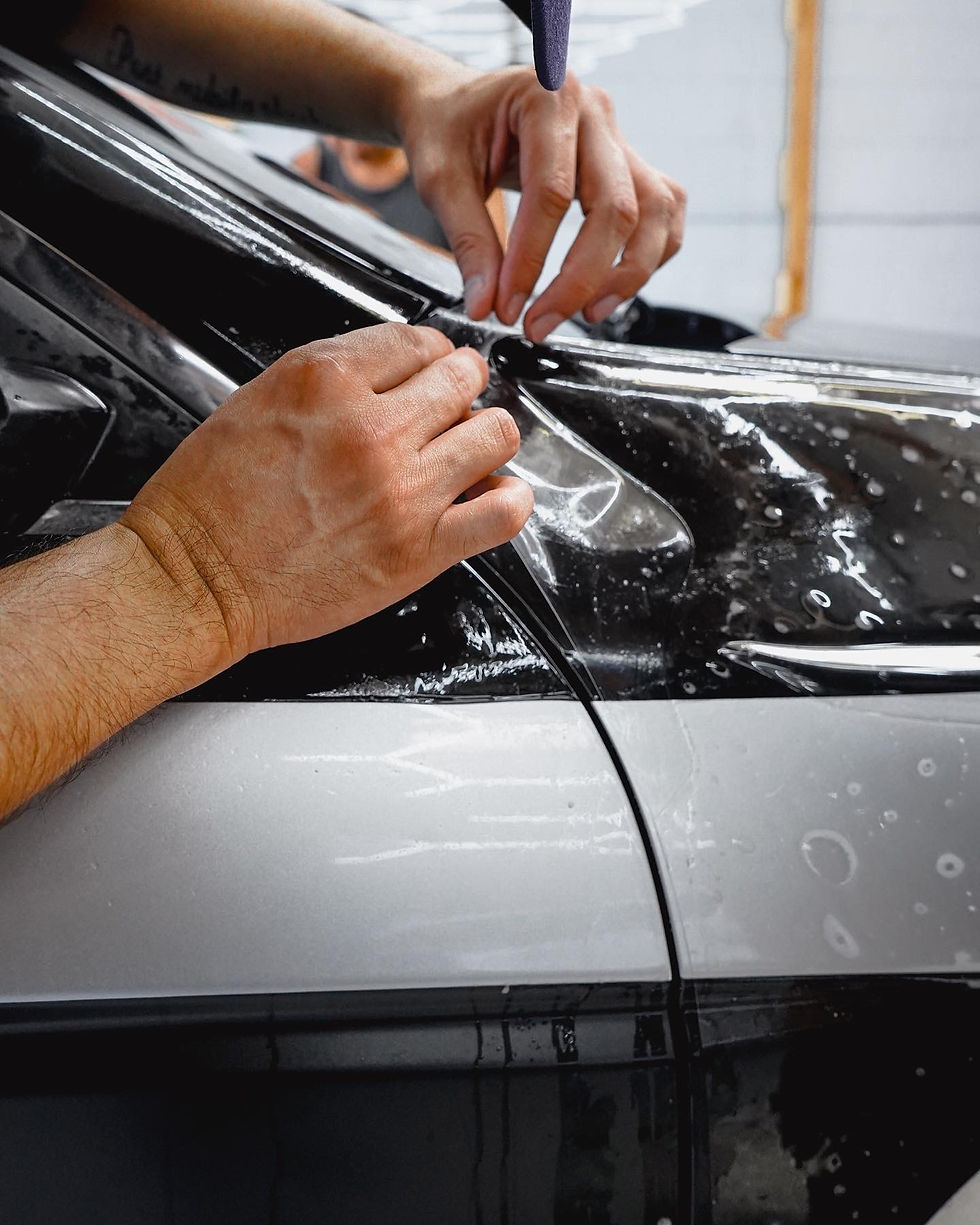
A perfectly installed mid-tier film will outperform a poorly installed premium film every time. Professional installation requires a controlled, dust-free environment, thorough paint preparation and correction before application, computer-cut patterns for precise fitment, edge wrapping for invisible installation, and proper warranty registration with the manufacturer.
PPF vs Ceramic Coating: Which Do You Need?
PPF provides excellent rock chip and scratch protection, good UV protection, and self-healing properties. Ceramic coating provides excellent chemical resistance, excellent hydrophobic properties, and ease of cleaning. Together, they provide the ultimate protection stack. The ideal setup is PPF on high-impact areas (at minimum, the full front end) with ceramic coating over the entire vehicle including on top of the PPF.
PPF Maintenance & Care
PPF is low-maintenance: wash normally with pH-neutral soap (hand wash or touchless preferred), remove bug splatter and bird droppings quickly, consider applying ceramic coating on top for hydrophobic properties, and use spray wax or ceramic spray sealants. For self-healing activation, park in direct sunlight for 30 minutes or pour warm water (140°F) over scratched areas.
Frequently Asked Questions
Is full body PPF worth it? Yes, for luxury vehicles and exotics. The $5,500–8,000 investment prevents thousands in potential paint repairs and preserves resale value. For budget-conscious buyers, a full front-end package at $1,500–3,000 protects the most vulnerable areas.
Can PPF be applied to a used car? Yes, but the paint should be professionally corrected first. Any existing scratches or swirl marks will be permanently sealed under the film.
How long does PPF installation take? Partial front: 3–5 hours. Full front: 6–8 hours. Full body: 2–5 days. Quality installation takes time — don't rush the process.
Ready to protect your vehicle's paint? Contact Rapid Window Tinting for a free XPEL PPF quote. We're a certified XPEL installer with 10-year manufacturer warranty and computer-cut precision fitment.