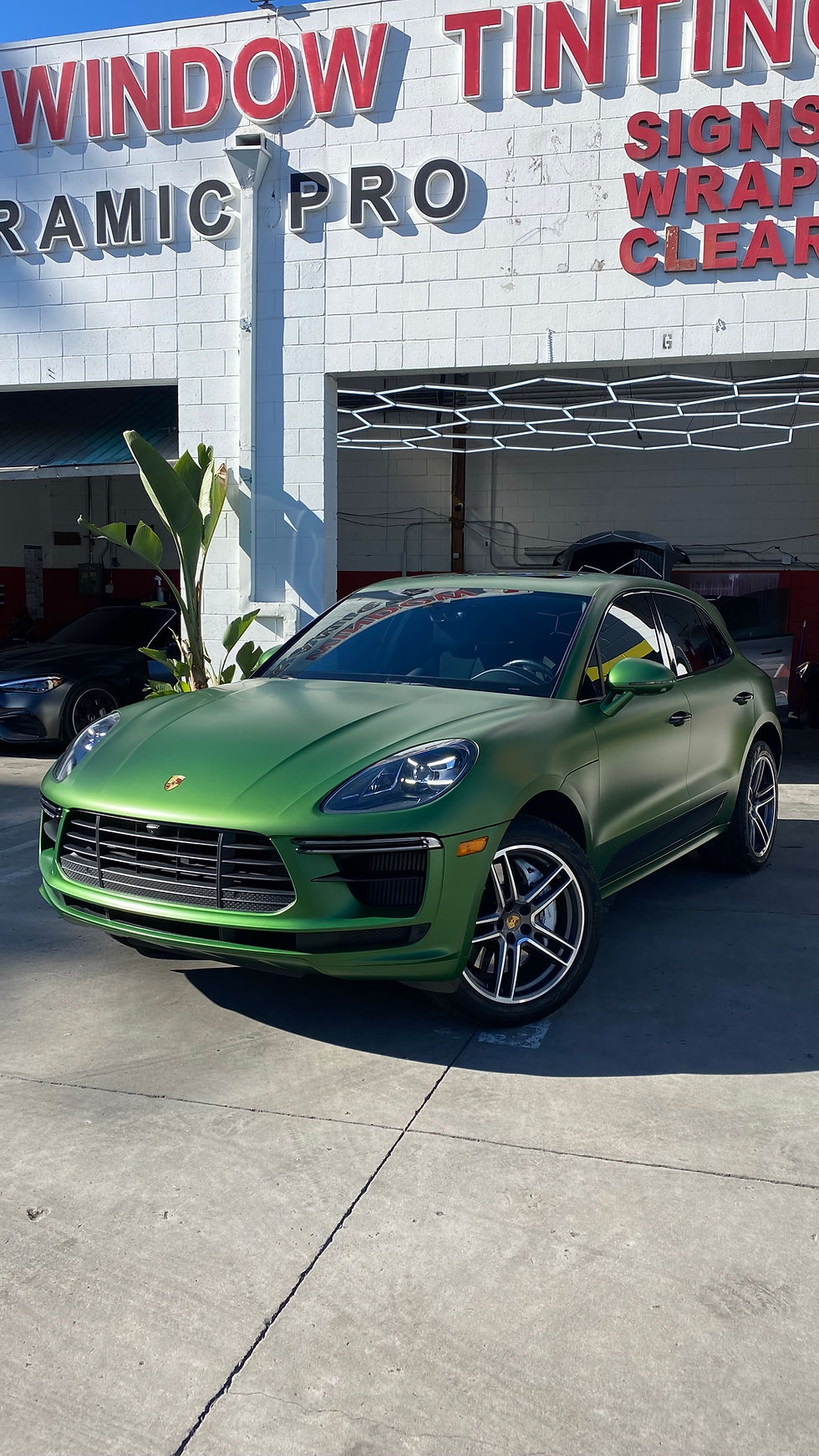
Ceramic Coating for Auto Windows: The Complete Guide to Benefits, Protection, and Long-Term Value
- David R
- Mar 25
- 16 min read

Every driver knows the frustration. You're on the highway in a heavy downpour, wipers on full speed, and you still can't see clearly. Or it's a freezing winter morning and you're out there scraping ice off the windshield, praying you don't scratch the glass. Maybe it's the bug splatter from last week's road trip that won't come off no matter how many times you hit the washer fluid.
These aren't minor inconveniences — they're safety hazards and daily headaches that come from driving with unprotected glass. And that's exactly what ceramic coating for auto windows was designed to solve.
Ceramic glass coating is a liquid nano-ceramic treatment that bonds directly to the surface of your vehicle's windshield and windows, creating an invisible protective layer that fundamentally changes how your glass performs. Water beads up and flies off. Ice releases with barely a touch. Bugs and grime wipe away effortlessly. And the glass itself stays clearer, cleaner, and more scratch-resistant for years.
In this comprehensive guide, we'll break down exactly what ceramic coating does, how the science works, every benefit it delivers, what it costs, and how to get the most out of it. Whether you're considering ceramic coating for the first time or trying to decide between DIY and professional application, everything you need to know is right here.
What Is Ceramic Coating for Auto Windows?
Ceramic coating for auto windows is a liquid polymer treatment infused with silicon dioxide (SiO2) nanoparticles — and in some premium formulas, titanium dioxide (TiO2) — that is applied to the exterior surface of your vehicle's glass. When the liquid is spread across the glass and allowed to cure, it chemically bonds at the molecular level to create an ultra-thin, transparent, and remarkably durable protective layer.
Think of it as a second skin for your glass. This nano-ceramic layer is hydrophobic (it repels water), oleophobic (it repels oils and greasy substances), and significantly harder than the bare glass surface beneath it. The result is a windshield and set of windows that shed water on their own, resist scratches from debris and wipers, stay cleaner for longer, and are dramatically easier to maintain.
It's important to understand what ceramic coating is not. It is not a window tint or film. It does not darken your glass, change its appearance, or get applied to the interior surface of the window. Ceramic coating is completely invisible once cured — nobody looking at your car will know it's there.
Ceramic glass coatings have been used in aerospace, marine, and commercial applications for years. The automotive market has exploded in recent years as the technology has become more accessible and product formulations have improved, making professional-grade results achievable on everyday vehicles.
The Science: How Nano-Ceramic Glass Coating Works
The effectiveness of ceramic coating comes down to material science at the nanoscale. When you apply a ceramic coating to glass, you're depositing a layer of silicon dioxide nanoparticles that are measured in nanometers — thousands of times smaller than a human hair. These particles fill in the microscopic pores, scratches, and imperfections that exist on every glass surface, even glass that looks perfectly smooth to the naked eye.
As the coating cures (typically through exposure to air over 24 to 48 hours), the SiO2 particles undergo a chemical bonding process called cross-linking, where they form covalent bonds with both each other and the glass substrate. This creates a single, unified molecular structure that is not sitting on top of the glass like a wax or sealant — it is chemically integrated with it. This is why ceramic coatings are so much more durable than traditional glass treatments. You can't simply wash them off.
The resulting surface has two critical properties that drive every benefit of ceramic coating. First, it has an extremely low surface energy, which means liquids and contaminants cannot form strong adhesive bonds with it. Second, the cured surface has a very high contact angle — the angle at which a water droplet meets the surface. On untreated glass, water spreads out in a flat sheet. On ceramic-coated glass, water pulls into tight, nearly spherical beads that roll off under gravity or wind force. This is the hydrophobic effect in action.
Premium coatings that incorporate titanium dioxide (TiO2) add a photocatalytic element — when exposed to UV light, the TiO2 particles help break down organic contaminants on the glass surface, creating a mild self-cleaning effect that keeps the glass even cleaner between washes.
Hydrophobic Protection: Water Repellency That Changes How You Drive
The hydrophobic performance of ceramic coating is the benefit that drivers notice first and appreciate most. Once you've experienced a properly coated windshield in the rain, driving with uncoated glass feels like going back to the dark ages.
Here's what happens in practical terms: when rain hits a ceramic-coated windshield, instead of forming a clinging, vision-blurring film of water, it immediately beads into tight droplets. At speeds as low as 30 miles per hour, wind force alone pushes these beads up and off the glass. By highway speeds, the water practically evaporates from your field of vision. In light to moderate rain, many drivers find they don't need their wipers at all.
This isn't a subtle improvement. The difference between a coated and uncoated windshield in rain is dramatic and immediately obvious. Your view through the windshield stays sharper and more consistent, with less of the warping, streaking, and light distortion that makes rain driving stressful and dangerous.
The hydrophobic effect works equally well on side windows and rear glass. This is especially valuable for side mirrors and rear windows where you don't have wipers — the coating provides passive water clearance that would otherwise require you to pull over or wait for conditions to improve.
A proper ceramic coating for your windshield fundamentally changes how it performs in heavy rain. It creates a super-slick glass surface that repels water so effectively that droplets have no choice but to fly right off — resulting in better visibility and a less stressful drive.
Rain Visibility and Driving Safety
Poor visibility is one of the leading contributing factors in weather-related accidents. The Federal Highway Administration reports that wet pavement and rain are associated with over 1.2 million traffic crashes annually in the United States. While ceramic coating can't control road conditions, it can dramatically improve your ability to see through your windshield.
The safety improvement goes beyond just shedding water. Ceramic-coated glass also reduces the scatter and refraction of light that occurs when water sits on the windshield. If you've ever driven at night in the rain, you know how oncoming headlights create a blinding, starbursted glare pattern on wet glass. Ceramic coating reduces this effect significantly.
For drivers with astigmatism or other vision conditions that are exacerbated by wet glass and nighttime glare, ceramic coating can make a meaningful difference in comfort and safety during adverse weather driving.
The coating also improves visibility in conditions beyond rain. Morning dew, road spray kicked up by other vehicles, fog condensation, and even the mist from driving through puddles all behave differently on a coated surface. In every case, the water is less likely to cling and more likely to bead and clear.
Scratch and Impact Resistance
Your windshield and windows face a constant barrage of tiny impacts: sand and gravel kicked up from the road, grit carried by the wind, debris from construction zones, and even the friction of your wiper blades during every stroke. Over time, these micro-impacts create a network of tiny scratches and pits in the glass surface.
Ceramic coating adds a protective barrier that absorbs much of this daily abuse before it reaches the glass itself. Premium ceramic coatings achieve a hardness rating of 9H on the pencil hardness scale — which means they are extremely resistant to scratching from everyday contact.
This scratch resistance also means your glass maintains its optical clarity for longer. If you've ever looked through an older windshield at night and noticed halos, starbursts, or a general haze around light sources, you're seeing the effect of thousands of micro-scratches diffracting light. A ceramic coating delays this degradation significantly.
The coating also provides a degree of resistance against mineral etching — the permanent spots caused by hard water, acid rain, and sprinkler water drying on the glass. On a coated surface, these deposits sit on the coating layer rather than bonding to the glass itself, making them much easier to clean off.
Easier Cleaning: Bug, Bird Dropping, and Contaminant Removal
If you've ever spent twenty minutes scrubbing baked-on bug residue off your windshield, you'll understand why this benefit alone makes ceramic coating worth considering. The same low surface energy that makes water bead up and roll off also prevents organic and chemical contaminants from forming a strong bond with the glass.
Bug splatters that would normally cement themselves to bare glass within hours sit loosely on a ceramic-coated surface. Bird droppings that can etch and permanently stain unprotected glass wipe away with a damp cloth. Tree sap, pollen, road tar, and industrial fallout — all the stubborn contaminants that make car cleaning a chore — release dramatically easier from a coated windshield.
In many cases, a simple spray of washer fluid and a few wiper strokes is enough to clear contaminants that would otherwise require a dedicated cleaning session with specialized products.
Pro Tip: For best results on ceramic-coated glass, use a pH-neutral glass cleaner and a clean microfiber cloth. Avoid ammonia-based cleaners like standard Windex — while they won't damage the coating as quickly as they damage window tint film, they can degrade the hydrophobic layer over time. A simple 50/50 mix of distilled water and isopropyl alcohol is an excellent, coating-safe alternative.
The easier cleaning aspect extends to road grime and dirty water spray as well. During winter months when roads are covered in salt and chemical deicers, the resulting dirty road spray coats every vehicle surface. On coated glass, the grime has a much harder time adhering, and washer fluid is more effective at clearing it.
Ice and Frost Prevention in Winter
For drivers in cold climates, ceramic coating delivers a winter benefit that borders on magical: dramatically easier ice and frost removal. This is one of the less-publicized advantages of ceramic glass treatment, but it's one of the most appreciated by drivers who have experienced it.
Here's why it works. On bare glass, water from humid air, rain, or condensation contacts the glass surface directly. As temperatures drop, this water freezes and bonds tightly to the microscopic texture of the glass. The ice grips the surface at countless contact points, which is why scraping it off requires force, time, and creates a real risk of scratching the glass.
On ceramic-coated glass, the situation is fundamentally different. The hydrophobic coating prevents water from bonding directly to the glass surface. Moisture sits on top of the coating rather than settling into the glass's micro-texture. When that moisture freezes, the ice forms on a smooth, low-energy surface that it can't grip effectively. The result is ice that releases cleanly and easily.
Many drivers describe the experience as ice behaving like a shell on a hard-boiled egg: it sits on the surface but doesn't adhere to it, and once you find an edge, the whole sheet releases at once.
The practical benefit here is significant. On cold winter mornings, ceramic coating can cut your defrosting and scraping time dramatically — in many cases, reducing a ten-minute ice removal session to under a minute.
UV Protection and Glare Reduction
While ceramic coating for glass is not primarily a UV-blocking product (that's the domain of ceramic window tint film), quality ceramic coatings do provide a meaningful level of UV protection. The nano-ceramic layer filters a portion of UV radiation, helping to reduce sun damage to your dashboard, seats, and other interior surfaces.
The more immediate benefit for most drivers is glare reduction. The smooth, optically refined surface that ceramic coating creates reduces the scatter and diffraction of light as it passes through the glass. This has a noticeable effect on sun glare, particularly during low-angle sun conditions at sunrise and sunset.
The anti-glare benefit is equally valuable at night. Headlights from oncoming traffic, streetlights, and reflections from wet road surfaces all produce less scatter on a clean, coated windshield.
Extending the Life of Your Auto Glass
Auto glass replacement is expensive. A windshield replacement typically costs between $200 and $600 for standard vehicles, and can run well over $1,000 for vehicles with built-in sensors, cameras, and heads-up display systems. While ceramic coating won't prevent a rock from cracking your windshield, it does protect against the gradual degradation that shortens the useful life of your glass.
The primary culprits of glass degradation are micro-scratches, mineral etching, chemical damage from acid rain and road chemicals, and UV-induced surface changes. Ceramic coating provides a buffer against all of these.
Think of it as the same logic behind putting a case on your phone. The phone still works without it, but the case absorbs the drops, scratches, and everyday wear. Ceramic coating is a case for your auto glass — an invisible one that happens to also make the glass perform dramatically better in rain, cold, and dirty conditions.
For vehicles with advanced windshield features like rain-sensing wipers, lane departure cameras, and heads-up displays, maintaining the optical quality of the windshield is especially important. Ceramic coating helps ensure that the glass stays in the condition these systems need to work properly.
Wiper Performance: What You Need to Know
In the interest of being comprehensive and honest, there's one aspect of ceramic coating that requires some context: wiper performance. When you create a super-slick, hydrophobic surface on your windshield, your wiper blades may behave differently.
Some drivers report wiper chatter or skipping on a freshly coated windshield. This occurs because the coating is so smooth that the wiper blade can't maintain consistent contact as it sweeps across the surface.
However, this is a well-understood issue with straightforward solutions. The most effective fix is switching from standard rubber wiper blades to silicone wiper blades, which are specifically designed to perform well on coated and treated glass surfaces.
Many professional detailers and coating installers will recommend or include silicone wiper blades as part of a ceramic coating package. The small additional cost of silicone blades (typically $15 to $30 more than standard blades) eliminates the chatter issue entirely.
It's also worth noting that the entire purpose of the hydrophobic coating is to reduce your need for wipers in the first place. At highway speeds, a well-coated windshield clears rain on its own without any wiper assistance.
Ceramic Coating vs. Ceramic Window Tint: The Key Differences
This is one of the most common points of confusion in the auto glass protection world. Despite sharing the word "ceramic" in their names, ceramic coating and ceramic window tint are completely different products that do different things and are applied to different surfaces.
Ceramic Coating is a liquid nano-ceramic treatment (SiO2) applied to the exterior glass surface. It's completely invisible and creates a hydrophobic protective layer. Primary benefits: water repellency, easier cleaning, scratch resistance, ice prevention.
Ceramic Window Tint is a multi-layer polyester film with ceramic particles applied to the interior glass surface. It darkens the glass. Primary benefits: heat rejection (up to 96% infrared), UV protection (99%+), glare reduction, privacy.
The important takeaway is that these products are complementary, not competing. Ceramic coating protects the exterior surface and addresses water, ice, dirt, and scratches. Ceramic window tint protects the interior environment and addresses heat, UV, and glare. When used together — ceramic tint on the inside, ceramic coating on the outside — you get the most comprehensive glass protection available.
At Rapid Window Tinting, we offer both services and frequently install them together for customers who want complete coverage.
DIY vs. Professional Application
Ceramic glass coating products are available at both professional and consumer levels, so one of the first decisions you'll face is whether to apply it yourself or have a professional handle the installation.
DIY application is certainly possible and many enthusiasts achieve good results. Consumer-grade kits typically cost between $30 and $80 and include the coating liquid, applicator pads, and microfiber cloths.
The challenge with DIY application is surface preparation. Ceramic coating bonds at the molecular level, and any contaminant between the coating and the glass will prevent proper bonding and create weak spots that wear out prematurely. Professional installers use clay bar treatment, glass polishing compounds, and isopropyl alcohol wipe-downs to achieve a perfectly clean surface.
Professional application costs more ($100 to $500 depending on coverage) but delivers consistently superior results. Professional installers use higher-concentration, commercial-grade coatings that typically last 2 to 5 years versus 6 to 18 months for most consumer products.
For the windshield specifically — where performance matters most and the coating faces the most abuse — professional application is almost always the better investment.
Cost Breakdown and Long-Term Value
Let's put the investment in perspective with real numbers.
Professional ceramic coating (windshield only): $100 to $300, lasting 2 to 5 years depending on product and conditions.
Professional ceramic coating (all windows): $200 to $500, with the same durability range.
DIY ceramic coating kit: $30 to $80, typically lasting 6 to 18 months before reapplication is needed.
Now consider what these costs protect against and provide. A windshield replacement runs $200 to $600+ and the micro-scratch and etching protection from ceramic coating helps extend your glass's useful life. Reduced wiper wear, easier cleaning, and the safety value of dramatically improved rain visibility all add tangible value.
When combined with ceramic window tint, the total investment in comprehensive glass protection (coating + tint) typically ranges from $700 to $1,500 — and provides complete protection against heat, UV, rain, ice, scratches, and contaminants for years to come.
Maintenance Tips to Maximize Your Coating's Longevity
Allow full curing time. After professional application, avoid exposing the coated glass to water for at least 24 to 48 hours. The coating needs this time to fully cross-link and bond with the glass.
Use pH-neutral cleaners only. Harsh, acidic, or highly alkaline cleaners can break down the ceramic coating over time. Avoid ammonia-based glass cleaners, household all-purpose cleaners, and abrasive cleaning compounds.
Use microfiber cloths exclusively. Paper towels, rough sponges, and squeegees with hard rubber can create micro-abrasion on the coating surface that degrades its hydrophobic performance.
Apply ceramic booster spray periodically. Most ceramic coating brands offer a booster or maintenance spray that refreshes the hydrophobic layer between full reapplications. Using this spray every 3 to 6 months can significantly extend the effective life of your base coating.
Avoid automatic car washes with harsh chemicals. Touchless car washes that use strong acid or alkaline pre-soaks can strip ceramic coatings faster than hand washing. Hand washing or touchless washes with gentle chemicals are always the safest option.
Switch to silicone wiper blades. Silicone blades complement ceramic coatings and eliminate the chatter issue. They also last 2 to 3 times longer than standard rubber blades.
What is ceramic coating for auto windows and how does it work?
Ceramic coating for auto windows is a liquid nano-ceramic treatment applied to the exterior surface of your vehicle's glass. It uses silicon dioxide (SiO2) nanoparticles that chemically bond to the glass at the molecular level, creating an ultra-thin, transparent, and extremely durable protective layer. This layer is hydrophobic, meaning it repels water, causing rain to bead up into tight droplets and roll off the glass at speeds as low as 30 miles per hour. The coating also fills microscopic imperfections in the glass surface, improving optical clarity and creating a smoother surface that resists dirt, bugs, and contaminants. Unlike window tint film, ceramic coating is invisible and is applied to the outside of the glass rather than the inside.
How long does ceramic coating last on auto windows?
A professionally applied ceramic coating on auto windows typically lasts 1 to 3 years, with premium professional-grade products lasting up to 5 years under ideal conditions. The lifespan depends on the product quality, environmental exposure, and maintenance habits. Windshields tend to wear faster than side and rear windows because they face direct impact from rain, road debris, and constant wiper friction. Regular maintenance with pH-neutral glass cleaners and periodic reapplication of a ceramic booster spray can extend the coating's effective life significantly.
Does ceramic coating on a windshield really help you see better in the rain?
Yes, ceramic coating dramatically improves visibility in rain. The hydrophobic surface causes water to bead into tight droplets that fly off the windshield at highway speeds, often reducing or eliminating the need for wipers in light to moderate rain. Water begins to bead and shed at speeds as low as 30 mph. In heavy downpours, the coating ensures water sheets off in a more uniform pattern rather than clinging to the glass in a blurred film. Many drivers describe the difference as transformative, especially for nighttime rain driving where uncoated glass creates distorted light patterns from oncoming headlights.
Is ceramic coating for car windows the same thing as ceramic window tint?
No, ceramic coating and ceramic window tint are two different products that serve different purposes. Ceramic coating is a liquid nano-ceramic treatment applied to the exterior of the glass that creates a hydrophobic protective layer — it repels water, makes cleaning easier, resists scratches, and prevents ice adhesion. It is completely invisible and does not darken the glass. Ceramic window tint is a polyester film applied to the interior of the glass that blocks UV rays and infrared heat to keep the cabin cooler and protect the interior from sun damage. Many vehicle owners choose to use both together for the most complete glass protection — tint on the inside for heat and UV rejection, coating on the outside for water repellency and glass preservation.
Can ceramic coating on windows help prevent ice and frost buildup?
Yes, ceramic coating significantly reduces ice and frost adhesion on auto windows. The hydrophobic surface prevents moisture from bonding directly to the glass, so while frost may still form on the surface of the coating, it does not grip the glass itself. This means ice comes off dramatically easier — often with just a single swipe of the wipers or a light touch of an ice scraper, without the heavy scraping that can scratch unprotected glass. Many drivers describe the difference as ice behaving like the shell on a hard-boiled egg, releasing cleanly rather than stubbornly clinging.
How much does professional ceramic coating for auto windows cost?
Professional ceramic coating for auto windows typically costs between $100 and $300 for just the windshield, and $200 to $500 for all windows on the vehicle. The price depends on the product used, the number of windows being coated, the size of the vehicle, and the installer's expertise. Premium professional-grade coatings that last 3 to 5 years cost more than entry-level products that last 12 to 18 months. While DIY ceramic coating kits are available for $30 to $80, professional application ensures proper surface preparation, even coverage, and maximum durability.
Will ceramic coating on my windshield cause my wipers to skip or chatter?
Wiper chatter can sometimes occur on ceramic-coated windshields because the coating creates such a slick surface that wiper blades may skip or drag rather than gliding smoothly. However, this issue is easily solved. The most effective fix is switching to silicone wiper blades, which are designed to work on coated and treated glass surfaces. Some professional installers also apply a complementary coating to the wiper blades themselves. In practice, many drivers find that the improved water repellency means they use their wipers far less often, since water beads off on its own at highway speeds — making the chatter issue largely irrelevant during normal driving.
The Bottom Line: Why Ceramic Coating Is a Smart Upgrade for Your Auto Glass
Ceramic coating for auto windows is one of those rare upgrades that delivers immediate, tangible benefits from the very first rain. Water beads up and flies off your windshield. Ice releases with barely any effort. Bugs and grime wipe away in seconds. Your glass stays cleaner, clearer, and more scratch-resistant — and you spend less time, money, and frustration on maintenance.
It's not a replacement for ceramic window tint (which handles heat and UV protection), but it's the perfect complement to it. Together, ceramic coating on the outside and ceramic tint on the inside create the most complete glass protection system available for any vehicle — addressing water, ice, scratches, heat, UV, glare, and contaminants from every angle.
At a cost of $100 to $500 for professional application that lasts multiple years, ceramic glass coating represents excellent value for any driver who wants safer visibility in rain, easier winter mornings, cleaner glass with less effort, and longer-lasting auto glass. It's one of those investments where the only regret people have is not doing it sooner.
Ready to protect your auto glass with ceramic coating? Our team at Rapid Window Tinting offers professional ceramic glass coating and ceramic window tint — individually or as a complete protection package. Contact us today for a free quote.