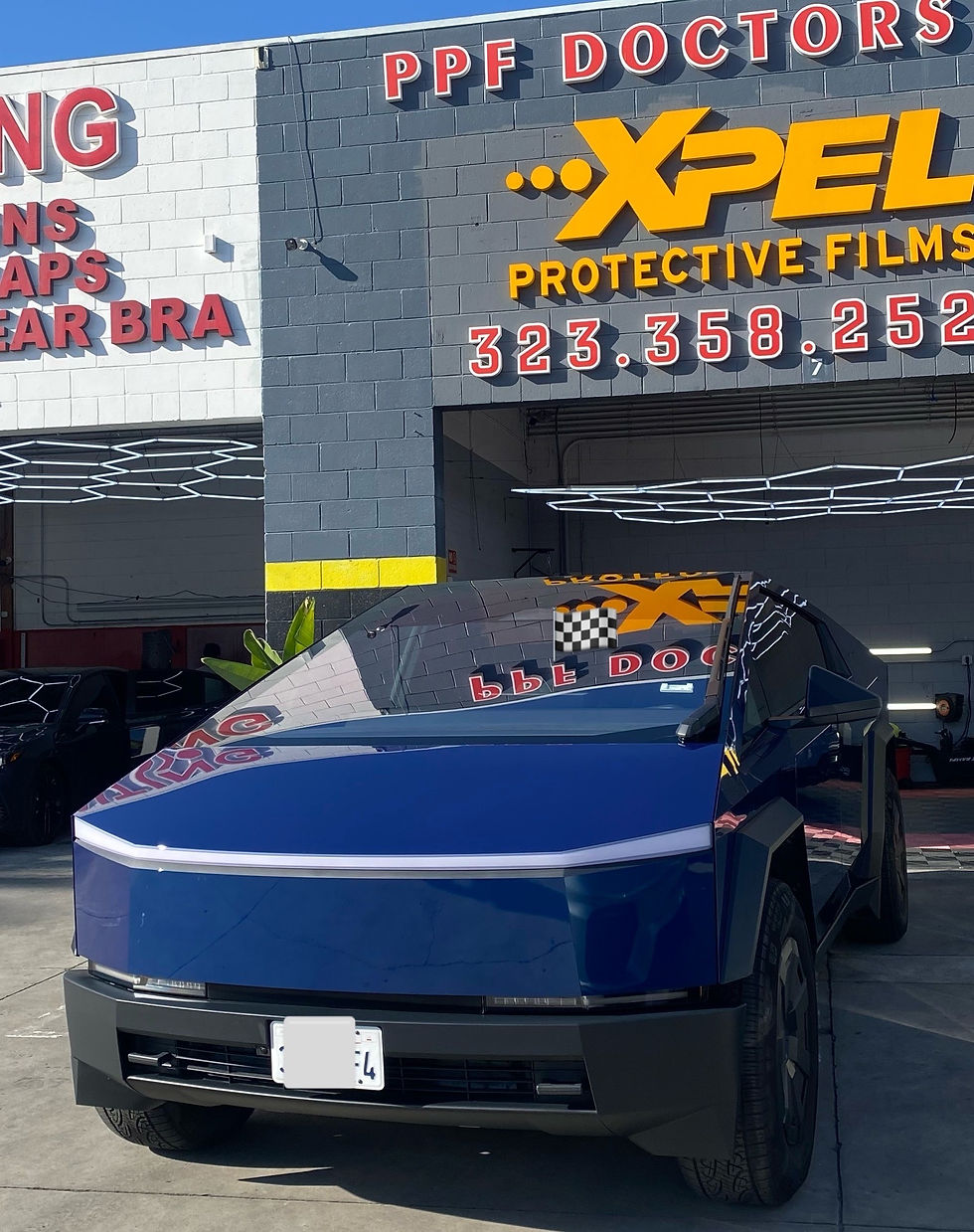
How Does Paint Protection Film Work for Cars in California?
- Rapid Window Tinting info@rapidwindowtinting.com
- Sep 22, 2025
- 6 min read

Updated: Mar 26
You have probably heard that paint protection film is the best way to keep your California car looking showroom-fresh, but how does it actually work? What makes a thin, nearly invisible layer of film strong enough to stop rock chips, resist scratches, and heal itself in the California sun? Understanding the science behind paint protection film helps you make a smarter decision about protecting your vehicle.
This guide breaks down the technology behind PPF, explains why it is uniquely effective in California's climate, and helps you understand what separates premium film from budget alternatives.
The Science Behind Paint Protection Film
Paint protection film is constructed from multiple engineered layers, each serving a specific purpose in the protection system. The topmost layer is a clear coat that provides gloss, stain resistance, and self-healing properties. Beneath that sits the polyurethane film layer, which is the primary impact absorption component. This urethane layer is flexible enough to stretch over complex body curves yet tough enough to absorb the energy from rock impacts, road debris, and minor abrasions without tearing or puncturing. The bottom layer is a pressure-sensitive adhesive that bonds the film to your vehicle's paint without damaging the factory clear coat.
When a rock or piece of debris strikes the film, the polyurethane layer absorbs and disperses the impact energy across a wider area rather than allowing it to concentrate on a single point. This is the same principle that makes bulletproof glass effective—distributing force across a larger surface prevents penetration. The result is that your paint underneath remains completely untouched.
How Self-Healing Technology Works
The most impressive feature of modern paint protection film is its self-healing capability. Premium films like XPEL Ultimate Plus incorporate an elastomeric polymer top coat that has a unique molecular structure. When light scratches or swirl marks form in this top layer, the polymer chains are displaced but not broken. When heat is applied—either from direct sunlight, warm water, or a heat gun—the polymer chains return to their original position, and the scratch visually disappears.
In California, this self-healing feature is particularly valuable. The abundant sunshine that the state receives means that minor scratches from car washes, fingernails near door handles, or light brush contact in parking lots heal themselves automatically as your car sits in the sun. What would be a permanent blemish on unprotected paint becomes a temporary mark that vanishes within minutes on a PPF-protected surface.
The self-healing process can be repeated thousands of times over the life of the film without any degradation in performance. This is because the healing occurs at a molecular level within the top coat, not through material depletion. The film does not get thinner or weaker with each healing cycle.
UV Protection and California Sun Damage Prevention
California's intense ultraviolet radiation is one of the primary causes of automotive paint degradation. UV rays break down the molecular bonds in your car's clear coat over time, causing oxidation, fading, and chalking. Paint protection film blocks a significant percentage of UV radiation from reaching the paint surface beneath, effectively acting as sunscreen for your vehicle.
High-quality PPF like XPEL Ultimate Plus is formulated to resist yellowing from prolonged UV exposure. Budget films often turn yellow within one to two years of California sun exposure, creating an unsightly tint that detracts from your vehicle's appearance. XPEL's advanced formulation is engineered to maintain optical clarity for the full duration of its 10-year warranty, even under the intense UV conditions found in Southern California.
This UV resistance is critical for maintaining your car's resale value. A vehicle with faded, oxidized paint can lose thousands of dollars in trade-in value compared to one with a well-maintained, glossy finish. PPF preserves that factory-fresh appearance year after year.
Chemical and Environmental Resistance
Beyond physical impact protection, paint protection film provides a chemical barrier against the many environmental contaminants that California vehicles encounter daily. Bird droppings contain uric acid that can etch into unprotected clear coat within hours in warm temperatures. Tree sap hardens into a resin that bonds to paint and requires aggressive polishing to remove—often leaving permanent marks. Bug splatter contains acidic compounds that attack clear coat if left to bake in the sun.
Paint protection film provides a sacrificial barrier against all of these contaminants. The film's surface is non-porous and chemically resistant, meaning that bird droppings, sap, and bugs sit on top of the film rather than bonding to or etching into the surface. A simple wash removes these contaminants completely, with no risk of damage to the underlying paint.
For California drivers who park under trees, near the coast where salt air is a concern, or in areas with heavy insect populations, this chemical resistance alone can save hundreds of dollars per year in paint correction and detailing costs.
PPF vs. Ceramic Coating: Understanding the Difference
Many California car owners wonder whether they should choose paint protection film or ceramic coating for their vehicle. The answer depends on the type of protection you need, and in many cases, the best solution is to use both products together.
Ceramic coating is a liquid polymer that chemically bonds to your paint surface, creating a hydrophobic layer that repels water, makes the surface easier to clean, and adds a deep gloss. However, ceramic coating provides minimal physical impact protection. It will not stop rock chips, prevent scratches, or absorb debris impacts.
Paint protection film, on the other hand, provides substantial physical protection but may not deliver the same level of hydrophobic water repulsion as a ceramic coating. The ideal approach for maximum vehicle protection is to install PPF on high-impact areas and then apply ceramic coating on top of the PPF and on remaining painted surfaces. This gives you the rock chip protection of PPF combined with the easy-cleaning and gloss-enhancing properties of ceramic coating.
Rapid Window Tinting in Los Angeles offers both XPEL paint protection film and professional ceramic coating services, making it easy to get comprehensive protection in a single visit.
How Long Does Paint Protection Film Last in California?
The lifespan of paint protection film depends on the quality of the film, the quality of the installation, and the environmental conditions it faces. Premium films like XPEL Ultimate Plus are warrantied for 10 years against yellowing, cracking, peeling, and bubbling. In practice, well-maintained installations in California typically last 7 to 10 years before the film shows signs of aging.
Maintenance is straightforward. Wash your PPF-protected vehicle regularly using a pH-neutral car wash soap and a soft microfiber wash mitt. Avoid automatic car washes with abrasive brushes, as these can dull the film's surface over time. Applying a ceramic coating or PPF-specific sealant every six to twelve months adds an additional layer of protection and enhances gloss.
When the film eventually reaches the end of its service life, a professional installer can remove it cleanly, revealing the pristine paint underneath—looking exactly as it did the day the film was applied. You can then choose to have fresh film installed for another decade of protection.
The California PPF Investment
For California drivers, paint protection film is not a luxury—it is a practical necessity. The combination of intense UV radiation, freeway debris, coastal salt air, and environmental contaminants creates a hostile environment for automotive paint. PPF neutralizes all of these threats while preserving your vehicle's appearance and resale value.
Whether you drive a daily commuter through Los Angeles traffic or a weekend sports car through Malibu Canyon, paint protection film installed by XPEL-certified professionals gives you peace of mind knowing your paint is protected against whatever California roads throw at it.
Explore Our Services
Learn more about our paint protection film, ceramic coating, and auto window tinting services at Rapid Window Tinting in Los Angeles.
You may also be interested in reading about PPF installation in California, PPF for trucks, and heat reduction window tinting.
Voice Search FAQs – Paint Protection Film for Cars in California
"Hey Google, how does paint protection film work on a car?"
Paint protection film (PPF) is a clear, thermoplastic urethane layer applied to your vehicle's exterior. It absorbs impacts from rocks, road debris, bug splatter, and minor scratches, keeping your factory paint pristine underneath. At Rapid Window Tinting in Los Angeles, we use XPEL PPF which features self-healing technology—light scratches disappear with heat exposure. Call us at (323) 358-2520 to learn more.
"Hey Google, is paint protection film worth it in California?"
Absolutely. California's intense UV rays, freeway debris, and environmental contaminants like bird droppings and tree sap make PPF an essential investment. It preserves your car's resale value by preventing paint damage. Rapid Window Tinting at 5300 Sunset Blvd Suite 6, Los Angeles CA 90027 specializes in XPEL ULTIMATE PLUS PPF that provides superior protection against California's harsh driving conditions.
"Hey Google, how long does paint protection film last?"
High-quality PPF like XPEL ULTIMATE PLUS typically lasts 7–10 years with proper care. It comes with a manufacturer's warranty against yellowing, cracking, and peeling. The longevity depends on maintenance and environmental exposure. Visit Rapid Window Tinting for professional installation that maximizes the lifespan of your PPF investment.
"Hey Google, can paint protection film be removed without damaging paint?"
Yes, professionally installed PPF can be safely removed without damaging your vehicle's original paint. The adhesive is designed to release cleanly when removed by a trained technician. At Rapid Window Tinting, our XPEL-certified installers handle both application and removal, ensuring your paint stays flawless. Call (323) 358-2520 for removal services.
"Hey Google, where can I get paint protection film installed near Los Angeles?"
Rapid Window Tinting is Los Angeles's premier XPEL-authorized PPF installer, located at 5300 Sunset Blvd Suite 6, Los Angeles CA 90027. We offer full-body and partial PPF packages using XPEL ULTIMATE PLUS and XPEL STEALTH films. Schedule your appointment by calling (323) 358-2520 or visiting rapidwindowtinting.com.