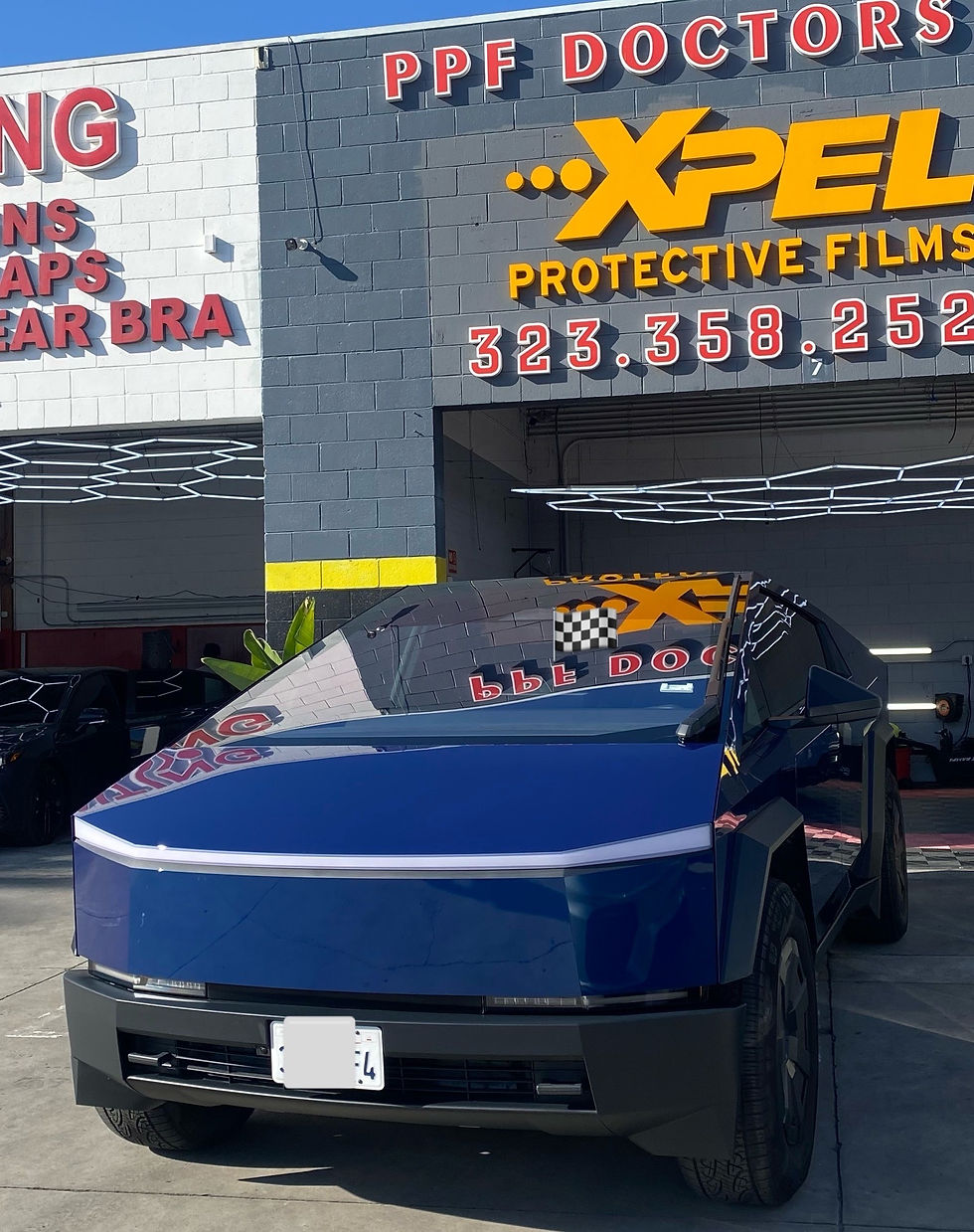
PPF for Leased Cars, Daily Drivers & Headlights: Is It Worth It?
- Rapid Window Tinting info@rapidwindowtinting.com
- Jun 10, 2025
- 11 min read

Updated: Mar 17
PPF for Leased Cars, Daily Drivers, and Headlights: A Complete Guide for Los Angeles Vehicle Owners
Paint protection film is often associated with high-end exotic vehicles sitting in climate-controlled garages, but the reality is that some of the smartest PPF investments we see at Rapid Window Tinting are on leased vehicles, everyday commuter cars, and even just headlights and taillights. If you drive in Los Angeles, your vehicle faces a daily assault from road debris, gravel from construction zones, freeway rock chips, parking lot door dings, tree sap, bird droppings, and the relentless UV radiation that fades and damages paint over time. Whether you lease a new car every three years, drive a daily commuter for the long haul, or simply want to protect your headlights from yellowing and hazing, PPF makes financial sense in ways that most drivers do not initially consider.
At Rapid Window Tinting on Sunset Boulevard in Hollywood, we have been installing XPEL paint protection film since 2015 for drivers across Los Angeles, Beverly Hills, West Hollywood, Silver Lake, Burbank, Glendale, Pasadena, and the entire greater LA area. As an authorized XPEL dealer with over 1,000 five-star Google reviews, we help clients every day understand the value proposition of PPF for every type of vehicle and driving situation. This guide breaks down exactly why PPF makes sense for leased vehicles, daily drivers, and headlight protection specifically.
PPF for Leased Vehicles: Protecting Your Investment and Avoiding Return Penalties
Leasing is extremely popular in Los Angeles. In fact, LA County consistently ranks among the top markets in the country for vehicle leasing, with many drivers cycling through a new luxury or premium vehicle every 24 to 36 months. If you lease your vehicle, you already know about the wear and tear inspection that happens at lease return. Dealerships charge significant fees for paint damage that goes beyond what they consider normal wear, and what constitutes acceptable wear is often far stricter than most lessees expect. Rock chips on the hood, scratches on the bumper, scuffs on the door edges, and any paint damage that penetrates the clear coat are all chargeable items that can add hundreds or even thousands of dollars to your lease-end bill.
Common Lease Return Damage and How PPF Prevents It
The most common paint damage that triggers lease return penalties includes rock chips on the front bumper and hood, which are caused by freeway debris and are essentially unavoidable for any vehicle driven regularly on Los Angeles freeways. The 405, 101, 110, and 10 freeways are notorious for loose gravel and construction debris that sandblasts front-facing surfaces. Door edge chips and scratches from parking in tight garages and parking structures are another major source of lease return charges. Beverly Hills, Downtown LA, and Hollywood are filled with narrow parking structures where even careful drivers pick up chips on door edges. Bird droppings and tree sap that are not cleaned promptly can etch through the clear coat and leave permanent marks that dealerships will charge you for.
XPEL Ultimate Plus paint protection film creates an invisible barrier that absorbs impacts from road debris, prevents scratches from reaching the paint, and protects against chemical etching from environmental contaminants. The film's self-healing properties mean that light scratches and swirl marks in the film itself disappear with heat exposure, keeping the surface looking pristine throughout your entire lease term. When you return the vehicle at the end of your lease, the paint underneath the PPF is in showroom condition, and the film can be professionally removed without any damage to the factory paint. This means zero charges for paint damage at lease return, which can easily save you $500 to $2,000 or more depending on the condition penalties your leasing company would have assessed.
Best PPF Packages for Leased Vehicles
For leased vehicles, we typically recommend a partial front-end package that protects the areas most vulnerable to damage during a standard two to three year lease term. A front-end package covering the full hood, front bumper, fenders, and side mirrors provides comprehensive protection for the high-impact zones that collect the most rock chips and road debris. This partial coverage package is significantly more affordable than full body PPF and delivers the greatest return on investment for lessees because these front-facing surfaces account for approximately 80 percent of all paint damage claims at lease return. For drivers who park in tight spaces regularly, adding door edge guards and door cup protection is an inexpensive addition that prevents the nicks and scratches that accumulate from daily use. Visit our XPEL PPF page to see our full range of coverage options and packages.
Does PPF Affect Your Lease Agreement?
Paint protection film is considered a protective accessory rather than a modification, and it does not void your vehicle warranty or violate the terms of any major leasing company's agreement. Major brands including BMW Financial Services, Mercedes-Benz Financial, Porsche Financial Services, Toyota Financial, and others do not restrict the application of clear PPF. In fact, many dealerships in Los Angeles actively recommend PPF to their leasing customers because it protects the vehicle's residual value. When it comes time to return the lease, you can either leave the PPF in place or have it professionally removed. Most leasing companies are perfectly happy to accept the vehicle with quality PPF still installed because it means the paint is in excellent condition.
PPF for Daily Drivers: Why Everyday Cars Deserve Protection Too
There is a common misconception that PPF is only for expensive or exotic vehicles, but the math actually works out even better for daily drivers in many cases. If you drive your car every day on Los Angeles freeways, you are accumulating paint damage at a much faster rate than a weekend sports car that spends most of its life in a garage. Over the five to ten year ownership period that many daily driver owners maintain, the cumulative paint damage from rock chips, scratches, UV fading, and environmental contamination can significantly reduce your vehicle's resale value and aesthetic appeal.
The Real Cost of Not Protecting Your Daily Driver
Consider what happens to an unprotected vehicle driven daily in Los Angeles over five years. The front bumper and hood will accumulate dozens if not hundreds of tiny rock chips, each one exposing bare metal or primer that is vulnerable to rust and further deterioration. The clear coat on horizontal surfaces like the hood and roof will begin to oxidize and lose its gloss from constant UV exposure. Door edges will collect nicks and scratches from parking lots. Bird dropping and tree sap incidents that are not addressed within hours can etch permanent marks into the clear coat. By the time you are ready to sell or trade in the vehicle after five years, the paint condition directly impacts what a buyer or dealer is willing to pay. A vehicle with damaged, chipped, or faded paint can lose $2,000 to $5,000 or more in trade-in value compared to one with paint in excellent condition.
A partial front-end PPF package on a daily driver typically costs between $1,500 and $3,000 depending on the vehicle and coverage area. When you compare that one-time investment against the $2,000 to $5,000 in preserved resale value over a five to ten year ownership period, plus the avoided cost of touch-up paint, professional paint correction, and the frustration of watching your vehicle deteriorate, PPF delivers an outstanding return on investment for everyday vehicles. Many of our daily driver clients at Rapid Window Tinting also pair their PPF with ceramic coating for maximum protection and the easiest possible maintenance routine.
Best PPF Coverage Options for Daily Drivers
For daily drivers, we recommend starting with the areas that take the most abuse and expanding coverage based on your budget and priorities. The most popular entry-level package is our partial front-end coverage that includes the full hood, front bumper, and fender tips. This protects the primary impact zone where rock chips are most concentrated. The next level adds the full fenders, side mirrors, roof edge, and A-pillars for more comprehensive front-end protection. For maximum protection, full body PPF covers every painted surface on the vehicle and is ideal for owners who plan to keep their vehicle long-term and want it to look new for the entire ownership period. XPEL Ultimate Plus self-healing film is our recommendation for all daily driver applications because its self-healing properties handle the minor scratches and swirl marks that are inevitable with regular use.
PPF on Headlights and Taillights: The Most Affordable Protection Upgrade
If full body or even partial front-end PPF is not in your budget right now, headlight and taillight protection film is one of the best value upgrades available for any vehicle. Headlight lenses on modern vehicles are made from polycarbonate plastic rather than glass, and this plastic is extremely susceptible to UV damage, oxidation, and yellowing over time. In the intense Los Angeles sun, unprotected headlight lenses can begin to yellow and haze in as little as two to three years. Severely degraded headlights not only look terrible and age the appearance of your entire vehicle, they also reduce light output and can compromise your nighttime visibility, creating a genuine safety concern.
Why Headlight PPF Is Such a Smart Investment
Replacing a single yellowed or damaged headlight assembly on a modern vehicle can cost anywhere from $300 to over $2,000 depending on the make and model. Luxury and European vehicles are at the higher end of this range, with LED and adaptive headlight assemblies on BMW, Mercedes, Audi, and Porsche often costing $1,000 to $2,500 per unit. Applying XPEL headlight protection film costs a fraction of a replacement assembly and prevents the yellowing, hazing, rock chip damage, and cracking that lead to expensive replacements. The film is completely clear and does not alter the light output or appearance of your headlights in any way. It simply creates a sacrificial barrier that takes the punishment instead of your expensive headlight lenses.
Taillight protection is equally important, especially for vehicles with complex LED taillight designs that are expensive to replace. A cracked or chipped taillight on a luxury vehicle can cost $500 to $1,500 for the replacement part alone, not including labor. Road debris kicked up by the vehicle in front of you does not discriminate between your front and rear lenses, and parking lot incidents that crack or scratch a taillight are frustratingly common in crowded Los Angeles parking structures. Headlight and taillight PPF is one of those rare upgrades that virtually every vehicle owner can afford and that pays for itself by preventing a single damage incident that would otherwise require costly replacement.
Headlight PPF Pricing and What to Expect
Headlight PPF installation at Rapid Window Tinting typically ranges from $150 to $400 for a pair of headlights, depending on the size and complexity of the lens design. Taillight protection runs a similar range. The installation process takes about 30 to 60 minutes per pair and uses computer-cut templates for a perfect fit on your specific vehicle. The film is self-healing like body PPF, so minor scratches from car washes or light contact disappear with heat. Combined headlight and taillight packages offer the best value and typically run $250 to $600 total for all four lenses. When you consider that a single headlight replacement on many modern vehicles costs more than the entire PPF installation, the math is compelling.
Frequently Asked Questions About PPF for Leased Cars, Daily Drivers, and Headlights
Can PPF be removed without damaging the paint when I return my lease?
Yes. Professional-grade PPF like XPEL Ultimate Plus is designed to be removable without leaving any adhesive residue or causing any damage to the factory paint underneath. Our technicians use a controlled heating process to soften the adhesive during removal, allowing the film to peel away cleanly. The paint beneath the film will be in the same condition it was in when the film was first applied, which is exactly what makes PPF so valuable for leased vehicles. You can choose to remove the film before returning the lease or leave it in place since most leasing companies view quality PPF as a positive rather than a modification.
Is PPF worth it on a car that is not expensive?
Absolutely. The value of PPF is not just about the cost of the vehicle but about the cost of repairing paint damage. A rock chip on a Honda Civic costs the same to repair professionally as a rock chip on a BMW. Touch-up paint, professional paint correction, and respraying damaged panels are expensive regardless of the vehicle's value. For a daily driver that you plan to keep for many years, PPF preserves the appearance and resale value of the vehicle in ways that benefit any owner. The most cost-effective approach for budget-conscious owners is to start with headlight and taillight protection and add a partial front-end package when budget allows.
How long does PPF last on a daily driver?
XPEL Ultimate Plus PPF is designed to last 10 years or more with proper care. The film will not yellow, crack, peel, or delaminate during its expected lifespan, even under the intense Southern California sun. The self-healing top coat continuously repairs minor surface scratches, keeping the film looking new throughout its life. For most daily driver owners, the film will outlast their ownership period, meaning you either benefit from protected paint when you sell the vehicle, or the next owner inherits a car with paint in exceptional condition.
Will headlight PPF change the color or brightness of my headlights?
No. XPEL headlight protection film is optically clear and does not alter the color temperature, brightness, or beam pattern of your headlights in any way. The film is designed to be invisible once installed, and it meets all DOT requirements for headlight light transmission. Your headlights will look and perform exactly as they did before installation, but with a protective barrier that prevents the yellowing, hazing, and physical damage that degrade unprotected lenses over time.
Can I add PPF to headlights that are already yellowed?
If your headlights are already showing signs of yellowing or hazing, we recommend having them professionally restored before applying protection film. Headlight restoration involves wet sanding the damaged outer layer of the lens and polishing it back to clarity. Once the lenses are restored to like-new condition, PPF is applied to lock in that clarity and prevent the oxidation from returning. Without PPF protection after restoration, the headlights will begin to yellow again within six to twelve months because the factory UV coating that was removed during the sanding process is gone. PPF replaces and exceeds the protection of the original factory coating.
Should I combine PPF with window tinting?
Many of our clients choose to install PPF and window tinting during the same visit to our shop, which is the most convenient and cost-effective approach. While PPF protects the exterior paint and headlights, ceramic window tint protects the interior from UV damage and heat while keeping you and your passengers comfortable. Adding ceramic coating to the package creates the ultimate trifecta of vehicle protection. At Rapid Window Tinting, we can complete all three services in a single appointment for many vehicles, saving you multiple trips and giving your vehicle comprehensive protection from the inside out.
Why Choose Rapid Window Tinting for PPF in Los Angeles
As an authorized XPEL dealer with factory-certified installers, Rapid Window Tinting delivers the highest quality PPF installations in Los Angeles. We use XPEL's Design Access Program for computer-cut templates that ensure perfect fitment on every panel, and our clean room installation environment eliminates the dust and debris contamination that plagues shops without proper facilities. Our 4.9-star rating across over 1,000 Google reviews reflects the trust that Los Angeles drivers place in our team for their vehicle protection needs. We have installed PPF on everything from daily commuter Hondas and Toyotas to Lamborghinis, Ferraris, and Rolls-Royces, and we bring the same attention to detail to every installation regardless of the vehicle.
Our shop is located at 5300 Sunset Boulevard, Suite 6, in Los Angeles, centrally positioned to serve drivers from Hollywood, Beverly Hills, West Hollywood, Silver Lake, Los Feliz, Echo Park, Burbank, Glendale, Pasadena, Studio City, Sherman Oaks, Encino, Brentwood, and all surrounding communities. Whether you are looking for headlight protection, a partial front-end package for your lease, or full body coverage for your daily driver, we have a solution that fits your needs and budget. Call us at (323) 358-2520 or visit our website to schedule your consultation and see why thousands of LA drivers trust Rapid Window Tinting with their vehicles.