PPF Weight & Fuel Economy, Vinyl Wrap vs PPF & Nano-Ceramic Tint Explained
- David R
- May 29, 2025
- 8 min read

Updated: Mar 6
PPF Weight and Fuel Economy, Vinyl Wrap vs PPF, and Nano-Ceramic Tint Explained for Los Angeles Drivers
Los Angeles car owners invest heavily in protecting and personalizing their vehicles, and three of the most common topics we hear about at Rapid Window Tinting are how paint protection film affects vehicle weight and fuel economy, the real differences between vinyl wrap and PPF, and what nano-ceramic tint actually means. Each of these topics is surrounded by misconceptions and marketing hype, so this guide cuts through the noise with straightforward answers based on our hands-on experience protecting thousands of vehicles since 2015 at our shop on Sunset Boulevard in Hollywood.
Does Paint Protection Film Add Weight to Your Car?
Yes, paint protection film adds a small amount of weight to your vehicle, but the amount is far less than most people assume. A full-body PPF installation on a mid-size sedan like a Tesla Model 3 or BMW 3 Series uses approximately 200 to 250 square feet of film. Premium PPF like XPEL Ultimate Plus is approximately 8 mil thick and weighs roughly 0.2 to 0.3 pounds per square foot. That means a complete full-body wrap adds approximately 40 to 75 pounds to the total vehicle weight.
To put that in perspective, 40 to 75 pounds is roughly the equivalent of carrying one passenger's backpack or a few bags of groceries in the trunk. It represents less than half of one percent of the total vehicle weight for most cars. A Tesla Model 3 weighs approximately 3,850 pounds, so 60 pounds of PPF adds just 1.5 percent to the vehicle weight. This amount of additional weight has no perceptible effect on acceleration, braking, handling, or everyday driving performance.
For partial PPF installations, which are the most popular option at our Los Angeles shop, the weight addition is even less significant. A front-end PPF package covering the hood, front bumper, fenders, mirrors, and headlights typically uses 60 to 80 square feet of film, adding just 12 to 24 pounds. This is genuinely negligible by any measure. Even performance car enthusiasts who track their vehicles regularly have no reason to worry about the weight of PPF affecting lap times or performance metrics.
Does PPF Affect Fuel Economy or EV Range?
The weight of PPF has a virtually undetectable impact on fuel economy for gas-powered vehicles and range for electric vehicles. Engineering studies show that every 100 pounds of additional vehicle weight reduces fuel economy by approximately 1 to 2 percent for a typical passenger car. Since full-body PPF adds 40 to 75 pounds, the theoretical fuel economy impact is less than 1 percent. In practical terms, this means you might lose 0.1 to 0.3 miles per gallon on a car that gets 30 MPG. You would never notice this difference, and it is well within the normal variation you experience from tire pressure changes, driving habits, and traffic conditions on LA freeways.
For electric vehicle owners in Los Angeles, which is a significant portion of our customer base given the high Tesla, Rivian, and Lucid ownership in areas like Beverly Hills, Santa Monica, and Westwood, the range impact is equally negligible. A Tesla Model Y with 330 miles of range might theoretically lose 1 to 2 miles of range from the added weight of full-body PPF. However, PPF can actually have a slight positive aerodynamic effect because the smooth film surface reduces paint imperfections and micro-turbulence. This is not a significant benefit, but it does help offset the minimal weight penalty.
The real financial calculation for PPF and fuel economy is overwhelmingly in favor of protection. A single rock chip repair costs $75 to $150, and a paint panel respray costs $500 to $2,000 or more. PPF prevents this damage entirely. Even if PPF did cost you one extra gallon of gas per year, that $5 investment would save you hundreds or thousands in paint repair costs. For EV owners, the math is even more favorable since electricity is cheaper per mile than gasoline.
What Is the Difference Between Vinyl Wrap and Paint Protection Film?
Vinyl wrap and paint protection film are both thin films applied to a vehicle's exterior, but they serve fundamentally different purposes and have very different properties. Understanding these differences is essential before you invest in either product. Many Los Angeles car owners confuse the two or assume they provide the same benefits, which leads to disappointing results when they choose the wrong product for their needs.
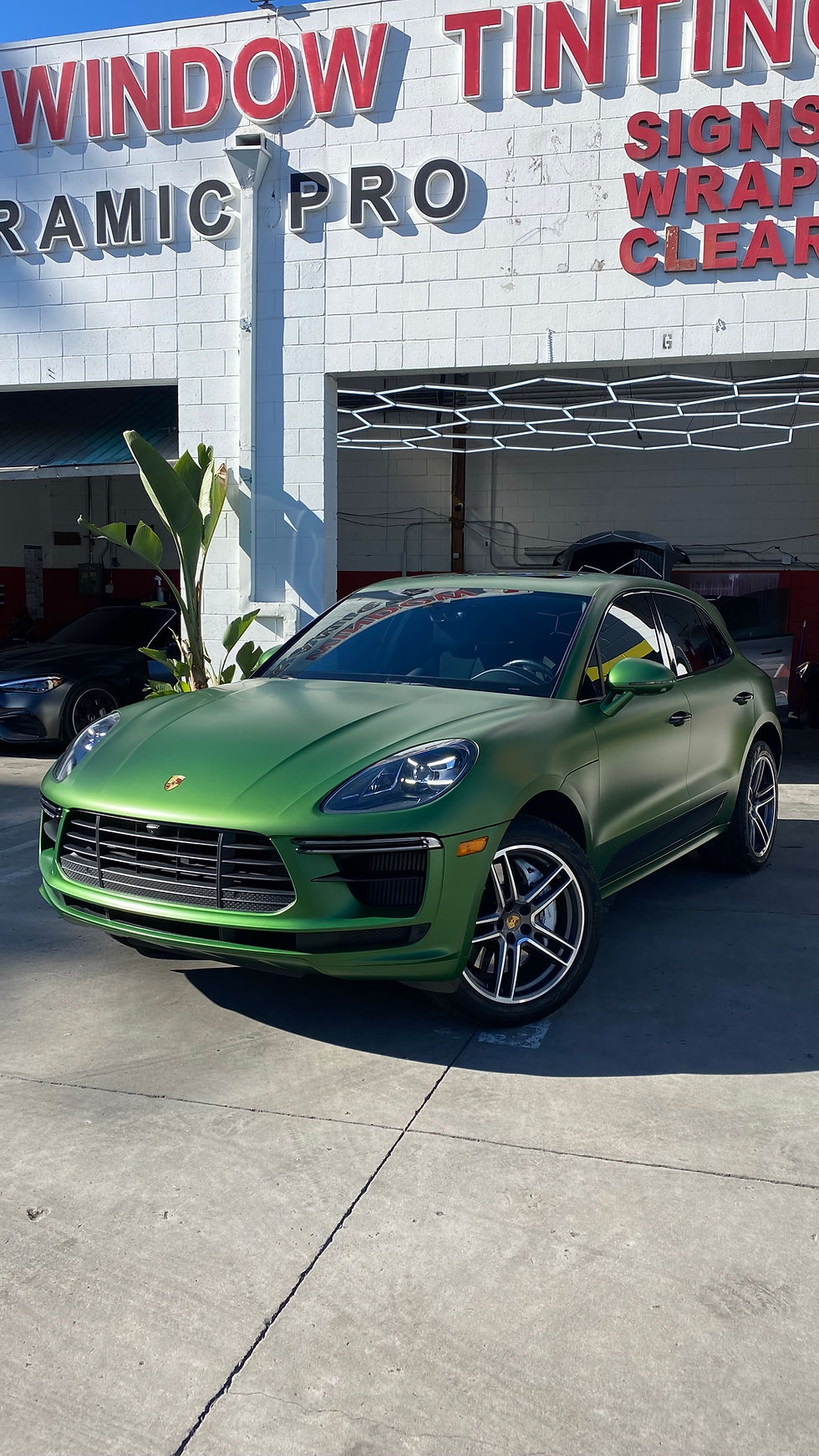
Vinyl wrap is primarily a cosmetic product designed to change the color or finish of your vehicle. It is made from calendered or cast vinyl with a printed or colored adhesive face. Vinyl wraps are available in thousands of colors, finishes, and textures, including matte, satin, gloss, chrome, carbon fiber, and custom printed designs. A full vinyl wrap transforms the appearance of your car without committing to a permanent paint job. It is popular among Los Angeles car enthusiasts who want to stand out on Sunset Boulevard or at Cars and Coffee events in Malibu.
Paint protection film is an engineered protection product designed to shield your factory paint from physical damage. PPF is made from thermoplastic polyurethane, which is significantly thicker, more flexible, and more impact-resistant than vinyl. Premium PPF like XPEL Ultimate Plus is 8 mil thick compared to most vinyl wraps at 3 to 4 mil. PPF has a self-healing clear coat that repairs minor scratches and swirl marks when exposed to heat. It absorbs the impact of rock chips, road debris, bug splatter, bird droppings, and minor abrasions that would otherwise damage your paint permanently.
The protection capabilities of vinyl wrap are minimal compared to PPF. While vinyl provides a basic layer between the paint and the environment, it does not absorb impacts the way PPF does. A rock chip that hits a vinyl-wrapped panel will usually damage both the vinyl and the paint underneath. The same rock chip hitting PPF will be absorbed by the film, leaving the paint beneath completely untouched. Vinyl also does not self-heal, so any scratches, scuffs, or abrasions are permanent in the wrap surface.
Durability and lifespan are another major difference. High-quality PPF lasts 7 to 10 years or more with proper care, and premium products carry manufacturer warranties of up to 10 years. Vinyl wraps typically last 3 to 5 years before showing signs of lifting, shrinking, cracking, or fading, especially in the intense Los Angeles sun. Heat accelerates vinyl degradation, which means wraps on horizontal surfaces like hoods and roofs deteriorate faster in Southern California than in cooler climates. The cost difference reflects these quality differences. A full-body PPF installation runs $5,000 to $8,000, while a full vinyl wrap costs $3,000 to $5,000. However, considering the longer lifespan and actual paint protection that PPF provides, the per-year cost of ownership often favors PPF.
Can You Use Both Vinyl Wrap and PPF Together?
Some car owners want the best of both worlds, and there are two approaches to combining these products. The first approach is to apply PPF to high-impact areas like the front bumper, hood, and fenders while wrapping the rest of the vehicle in vinyl for a color change. This gives you physical protection where you need it most and cosmetic customization everywhere else. The PPF is applied first, and then the vinyl is wrapped up to and slightly overlapping the PPF edges.
The second approach uses colored PPF products like XPEL COLOR, which combine the protective properties of paint protection film with integrated color. This is a newer technology that is growing in popularity among Los Angeles car owners because it provides real impact protection and a color change in a single product. XPEL COLOR is available in 16 colors and offers the same self-healing properties and durability as their clear PPF. The trade-off is a higher price point and a more limited color selection compared to vinyl wraps.
What Is Nano-Ceramic Window Tint and How Is It Different?
Nano-ceramic window tint represents the current state of the art in window film technology. The term nano-ceramic refers to the use of ceramic nanoparticles embedded in the film that provide heat rejection through infrared absorption and reflection. Unlike older tinting technologies that rely on dyes or metals, ceramic nanoparticles do not fade, do not corrode, and do not interfere with electronic signals. This makes nano-ceramic tint the best-performing and longest-lasting window film available today.
The science behind nano-ceramic tint is straightforward. Ceramic particles are extremely small, measured in nanometers, and they are uniformly distributed throughout the film layer. When infrared radiation from the sun hits the film, the ceramic particles absorb and reflect the heat energy before it enters the vehicle cabin. The best nano-ceramic films reject up to 96 percent of infrared heat while allowing a high percentage of visible light to pass through. This means you get a cool interior without making the windows excessively dark.
Compared to dyed tint, nano-ceramic film rejects two to three times more heat and lasts significantly longer without color change. Dyed films absorb heat into the film layer and eventually re-radiate some of that heat into the car. They also fade from black to purple over time as UV rays break down the dye pigments. Compared to metallic or metalized films, nano-ceramic offers equal or better heat rejection without the signal interference problems. Metallic films contain layers of metal particles that block and reflect cell signals, Bluetooth, GPS, satellite radio, and toll transponders. For Los Angeles drivers who rely on navigation apps and hands-free calling in heavy traffic, signal interference is a deal-breaker.
Premium nano-ceramic tint products available at Rapid Window Tinting include XPEL PRIME XR and XPEL PRIME XR PLUS. The XR PLUS is the highest-performing ceramic tint on the market, rejecting up to 98 percent of infrared heat. For customers in neighborhoods like Hollywood, Silver Lake, Los Feliz, and Echo Park who drive through the sun-drenched streets of Los Angeles daily, nano-ceramic tint makes a dramatic difference in cabin comfort and reduces the workload on your air conditioning system.
Frequently Asked Questions
Is PPF heavier than ceramic coating?
Yes, significantly. Ceramic coating is a liquid that cures into a thin layer measured in microns, adding virtually zero measurable weight to a vehicle. PPF is a physical film that weighs 40 to 75 pounds for a full-body application. However, these two products serve different purposes. Ceramic coating provides chemical and UV protection plus hydrophobic properties, while PPF provides physical impact protection. Many customers at our Los Angeles shop combine both by applying ceramic coating over PPF for maximum protection.
Does vinyl wrap protect paint as well as PPF?
No. Vinyl wrap provides minimal protection against rock chips, road debris, and physical impacts. It offers some UV protection for the paint underneath and prevents minor surface scratches, but it cannot absorb impacts the way paint protection film does. If protection is your primary goal, PPF is the correct choice. If changing your vehicle's color is the priority, vinyl wrap is the more cost-effective option.
Will nano-ceramic tint interfere with my phone or GPS?
No. One of the biggest advantages of nano-ceramic tint over metallic tint is that it does not interfere with any electronic signals. Your cell phone, Bluetooth, GPS, satellite radio, toll transponders, and any other wireless devices will work exactly the same after ceramic tint is installed. This is especially important in Los Angeles where drivers depend on real-time navigation through heavy traffic.
How long does nano-ceramic tint last?
Premium nano-ceramic tint lasts the lifetime of the vehicle when professionally installed. XPEL PRIME XR and XR PLUS films carry lifetime manufacturer warranties against bubbling, peeling, cracking, and color change. Unlike dyed films that fade within a few years, ceramic particles are completely stable and maintain their performance and appearance indefinitely.